Thursday, 22 September 2011

Komodo Island : Big lizards behind the beauty of nature

Komodo National Park lies in the Wallacea Region of Indonesia, identified by WWF and Conservation International as a global conservation priority area.  The Park is located between the islands of Sumbawa and Flores at the border of the Nusa Tenggara Timur (NTT) and Nusa Tenggara Barat (NTP) provinces. It includes three major islands, Komodo, Rinca and Padar, and numerous smaller islands together totaling 603 km2 of land. The islands of Komodo and Rinca, their jagged hills carpeted with savannah and fringed with mangroves, are home to a few hundred fishermen and the legendary Komodo dragon .

Komodo island
Komodo Island

The world’s largest lizard, known locally as ora, it can reach over 3m in length and weigh up to 100kg. It hunts alone and feeds on animals as large as deer and buffalo, both of which are found here. The males also try to eat the females’ eggs, inevitably sparking a vicious battle of the sexes.These isolated islands are surrounded by some of the most tempestuous waters in Indonesia.

The convergence of warm and cold water currents breeds nutritious thermal climes, rip tides and whirlpools that attract large schools of pelagics, from dolphins and sharks to manta rays and blue whales. The coral here is pristine. Add it all up and you have some ofthe best diving in the world, which is why live aboards based in Bali and Lombok ply these waters between April and September when the crossing is smooth and the diving at its finest.

VISITING KOMODO NATIONAL PARK

Komodo National Park
This national park (www.komodonationalpark.org), a Unesco World Heritage site, encompasses komodo, Rinca, several neighbouring islands, and their incredibly rich marine ecosystem. A three-day visitor permit includes your park entrance fee (40,000Rp adult or child) and the conservation fee (US$20 adult/US$10 child), collected on arrival by rangers.
A short, guided dragon-spotting trek is included with your entrance fee. For a longer, hour-long trek on Rinca you’ll pay an additional 50,000Rp. On Komodo, where the hiking is superb, you can pay from 50,000Rp to 250,000Rp for guided treks that range from flat 3km strolls to steep 10km hikes up and over peaks and into deep valleys. Arrange your trek upon registration in Komodo.

All guides speak some English and they are very knowledgeable about the islands’ flora and fauna. A camera permit is another 25,000Rp. Komodo is one of the driest corners of Nusa Tenggara, and heavy rains are not common. However, the seas are calmest between April and September.

KOMODO DRAGONS

Komodo dragons
Komodo Dragons
There were rumours of these awesome creatures long before their existence was confirmed in the West . Fishers and pearl divers working in the area had brought back tales of ferocious lizards with enormous claws, fearsome teeth and forked yellow tongues. One theory holds that the Chinese dragon is based on the Komodo lizard. The first Dutch expedition to the island was in 1910 , two of the dragons were shot and their skins taken to Java, resulting in the first published description. The Komodo dragon is actually a monitor lizard. All monitors have some things in common: the head is tapered, the ear openings are visible, the neck is long and slender, the eyes have eyelids and round pupils, and the jaws are powerful. But the dragons also have massive bodies, powerful legs (each with five-clawed toes) and long, thick tails (which function as rudders underwater, but can also be used for grasping or as a potent weapon).

The body is covered in small, non-overlapping scales; some may be spiny, others raised and bony.The dragons’ legs allow them to sprint short distances, lifting their tails as they run. When threatened, they’ll take refuge in their normal resting places – holes, trees (for the smaller ones) or water. They are dangerous if driven into a corner and will then attack even a much larger opponent. Komodo dragons often rise up on their hind legs just before attacking, and the tail can deliver well-aimed blows that will knock down a weaker adversary. Their best weapons are their sharp teeth and dagger-sharp claws, which can inflict severe wounds.

komodo Dragons-2
Hunt and eat.
Komodo dragons have a very keen sense of smell. All monitors feed on other animals – small ones on insects, larger ones on frogs and birds, and the ora (the local name for the dragon) on deer, wild pig and water buffalo. Ora can expand their jaws considerably, enabling them to swallow prey as large as a goat. To tackle even bigger prey, they ambush their victim, bite it and wait for the potent bacteria their mouths contain to take effect – waiting around for up to two weeks for a buffalo to die – before tucking in. Mature dragons are also cannibalistic, and small ora live the first five years of their lives up in trees for safety, not moving to ground level until they are 1m in length. Of all the monitors, the ora lay the largest eggs – around 90mm long and weighing around 200g.

The female lays 15 to 30 eggs at a time and often buries them in the wall of a dry river. She then protects her cache for three months from predators – including male dragons. The incubation period is nine months. Komodo dragons are not relics of the dinosaur age; they’re remarkably versatile, hardy modernlizards, if not exactly sensitive and New Age. Why they exist only on and around Komodo is a mystery, as is why males outnumber females by a ratio of 3.4 to one. Around 1300 ora live onKomodo, perhaps 1100 on Rinca and a small number (around 50) on the west coast of Flores. Today the ora are a protected species.

DIVING & SNORKELLING


Komodo National Park has some of the most exhilarating scuba diving in Indonesia. It’s a region swept by strong currents and cold upswellings, created by the convergence of the warmer Flores Sea and the cooler Selat Sumba (Sumba Strait) – conditions that create rich plankton soup and an astonishing diversity of marine life. Mantas and whales are drawn here to feed on the plankton during their migration from the Indian Ocean to the South China Sea, while dolphins are also common in the waters between Komodo and Flores. Among the several dozen dive sites mapped in the park are Batu Bolong, a split pinnacle with absolutely pristine coral and, compared to elsewhere in the park, light current; Crystal Bommie (aka Crystal Rock), with electric soft corals, turtles and schooling pelagics.

you will saw 19 reef and grey sharks in one dive. The currents are strong here and at Castle Rock (aka Tako Toko Toko), a tremendous sunrise dive site where, with a little luck, you’ll dive with dolphins. Then there’s The Cauldron, aka Manta Soupa a shallow drift dive over white sand where massive manta rays school and clean themselves on the rocks. If you’ve never seen mantas before, dive here. It’s guaranteed.

DIVING SITES

Diving map

Tanjung Rusa
A variety of small invertebrates and fish, including sharks and giant trevally, are visible while snorkeling the rocky slopes. Deeper diving to 40m reveals many coral trout, large groupers, schools of giant trevally, and massive dogtooth tuna.
Fantastic diving and snorkeling. Ideal entry is approximately 100m south of the bay’s western point. Once you have rounded the point, continue diving westwards. The shallow reef at the end of the dive is an excellent coral garden. Strong currents and sometimes down-currents can be experienced on the point. Recommended time to dive is during slack-tide.

Pantai Merah/ Pink Beach
There as a great variety of fishes here and also a good selection of critters such as leaf scorpionfish, blue ribbon eels, crocodile fish, nudibranchs, and more. Visibility varies but is best during falling tide.
This is the most frequently visited site in the Park for snorkeling and diving. Snorkeling is excellent from the beach and there is a very good dive around a small area of reef around a steep rocky wall which is visible from the surface of the water at low tide. This site is also a very good night dive and offers excellent macro-photography opportunities. Several mooring buoys are stationed at this site.

Karang Makasar
This site is for snorkling only, please don’t dive here as it will disturb the manta rays. The reef does not have much in the way of coral or fish life however this location is manta ray aggregation site. The best way to find the mantas is to cruise along the eastern face of the reef until you see them on the surface. The best time is during rising tide. Sometimes there can be between 40 to 50 mantas.

Mini Wall
The whole north face of this island is good diving. There are garden eels on the sandy slopes, and shrimp gobies and sweetlips are common. Occasionally, mandarin fish have been spotted in shallow water. This site also features beautiful coral gardens with a high abundance of both hard and soft corals.
This dive is an excellent refresher/check-out dive or just a nice easy dive with good visibility, calm conditions and no current. The diving entry point is marked by a long, low, rocky point east of the beach, which is at the center of the island’s northern coast.

Enter just on the eastern side of the point and swim counter-clockwise around the point at 20-25 m depth . Once around the point the reef slope will turn into a wall that drops to about 35 m depth. The wall continues to a sandy slope in front of the beach, which marks the end of the dive. A second dive can begin at the sandy slope and continue counter-clockwise across the front face of the beach to where the reef turns north and juts out to another point.

Crystal Rock
A very colorful dive with excellent soft coral coverage. Clouds of anthias and schools of yellow-ribbon sweetlips are always encountered while frogfish, moray eels and scorpionfish are commonly seen. There is a small mound northwest of the rock where different species of fish school seasonally, including tuna and mackerel.
An excellent dive usually worth doing twice. This name of this site is from the very clear water surrounding it. The top of the site is exposed at low tide. This site is prone to currents, which usually flow eastwards. Best time to dive is during slacktide.

And many more diving sites you can explore near komodo island .

How to Get There
While most visitors enter Komodo National Park (KNP) through the gateway cities of Labuan Bajo in the west of Flores or Bima in eastern Sumbawa, the departure point for your trip is actually Denpasar, Bali.

By Air:

Indonesia Air Transport (IAT)
Depart :
Everyday
DPS - LBJ : 10.00 – 11.30
LBJ - DPS : 12.00 – 13.30
Price:
Y CLASS : IDR 751.000
H CLASS : IDR 696.000
Q CLASS : IDR 641.000 (NON REFUND TICKET)

Trans Nusa Airlines (TGN)
Depart:Everyday
DPS – LBJ : 10.00 – 11.50 & 13.00 – 14.20
LBJ – DPS VIA BMU (BIMA) : 12.05 - 12.35
BMU-DPS : 12.50 – 13.45
LBJ – DPS : 14.35 – 15.15
Price
Y CLASS : IDR 761.000
L CLASS : IDR 651.000
M CLASS :IDR 541.000


By Land:
The gateway cities of Labuan Bajo and Bima are connected to Denpasar, Bali by overland buses.

By Sea (ferry):
Travel time: approximately 36 hours
The gateway cities of Labuan Bajo and Bima are also connected to Denpasar, Bali by inter-island ferry.
Contact the Indonesia Sea Transportation Company (PELNI) at Jalan Raya Kuta No. 299, Tuban - Bali (Tel: 0361 - 763 963) to reserve a seat on the KM. Tilong Kabila, which departs Benoa Port, Bali bound for Bima and Labuan Bajo

Benoa-Bima-Labuan Bajo
Fortnightly (every two weeks) on Saturdays: 09.00-20.00 (next day).
One-way ticket (as of 10/6/06) from Rp. 143,000.00 - Rp. 435,000.00

Labuan Bajo-Bima-Benoa
Fortnightly (every two weeks) on Thursdays: 08.00-11.00 (next day).
One-way ticket (as of 10/6/06) from Rp. 143,000.00 - Rp. 435,000.00

Note: the ferry schedule and ticket prices may change with or without prior notice


By Sea (live-aboard):
Komodo National Park is serviced by a wide range of live-aboard boats, with return packages to Komodo National Park from a variety of departure points, including Bali, Lombok, Bima and Labuan Bajo
Prices (as of 10/6/06) are ranging from USD 230.00 - USD 295.00 / person / night.

From Gateway Cities to Komodo National Park (KNP)
You can easily organize a shared boat charter by local boat from either ports at Labuan Bajo or Bima (Sape) to the two major points of access in the Park: Loh Liang (on Komodo Island) or Loh Buaya (on Rinca Island)
Charter price (as of 10/6/06) - excluding meals, KNP entrance fee etc:
Labuan Bajo: KNP: Rp. 750,000 - 1,500,000 per boat / day
Bima (Sape): KNP: Rp. 1,500.000 - 2,000.000 per boat / day

Note: the charter prices may change with or without prior notice

Tips to be more safely in Komodo island

Walking in the group. When trekking, stay in the group because of dragons attacking prey alone.

"Ranger" as a guide. Never far from the ranger who act as guides. Ranger is experienced in dealing with dragons. Generally, ranger armed with a wooden stick with a forked tip. This stick serves to dispel dragons.

Do not noisy and do not use perfume. Komodo has a keen hearing and smell. Therefore, be quiet while in the group. In addition, several ranger also advised not to wear perfume that is too stinging because of smell can lure dragons.

Like a chameleon, a deceptive silence. Beware when walking. The figure of dragons while napping briefly as dust or dry logs. Could accidentally, you step on the dragons. If you see dragons in a careless position, be careful. He is clever trick. In no standby position, he was actually waiting for unsuspecting prey.


Do not make sudden movements. Komodo usually calm if there are people passing by, the origin is not disturbed. One is a sudden movement. Therefore, do not run. The reason is, this movement can actually make you chase by the dragons.

If chased by komodo dragons? Run in a zig-zag. Komodo can not run in a zig-zag, and he'll turn distress. However, do not underestimate the speed of dragons. He was able to run 18 kilometers per hour.

Climbed to higher ground. If chased by dragons, come up to the house on stilts that are near you. Generally, buildings in this area like a house built in the shape of the stage. With this, dragons will have difficulty climbing stairs. However, be careful because dragons like shelter under the building. Do not go up into the tree because dragons ages one to two years are good climbing trees. Komodo age is forced to climb trees to avoid adult dragons. Komodo dragons are animals that can eat cannibals dragons wich are weaker than himself.

Women who menstruate. Komodo is very sensitive to the smell of blood. If he smells blood, he will instinctively look for it as prey. Therefore, women who are menstruating should report to the ranger. This needs to be on guard ranger. Women who are menstruating should keep doing trekking. However, it should not be at the beginning of menstruation .

Do not start a fire. This area is very dry and barren. Therefore, do not smoke or light a fire. A particle of fire could lead to fires in the region. These islands are vulnerable to fire hazards.

Use appropriate clothing. Cotton clothing that absorbs sweat is highly recommended for use while doing trekking. The sun is very hot and dry air here, too. Use a sunblock and a hat anyway. There's a good idea to wear long pants and long sleeves. To make it easier when walking, use the mountain sandals and sports shoes.

Bring a camera. Objects that must be taken of course the camera. No need to hesitate to bring a tripod and a telephoto lens because you want to photograph not only dragons, but also the view from a height, rare birds and other wildlife. If you have one, bring a waterproof camera also can be used in deep water. While visiting the island of Komodo, do not complete it if did not feel the snorkeling and diving.

Wednesday, 21 September 2011

Festival Krakatau 2011 : Lampung

Krakatoa Festival held  in 12 to 16 October 2011 to commemorate the enormity of the eruption of Mount Krakatoa, in addition to the introduction of tourist places in Lampung, which aims to attract tourists. The festival is fun if you can come to the Mount Krakatoa child directly, because the scenery is beautiful.

Krakatoa Festival held every year in Bandar Lampung (capital of Lampung Province) and South Lampung. The opening ceremony will be marked with a mass dance, cultural attractions & mask parade of the 11 districts / cities, ceremonial elephants and attractions paramotor.This year's event would fill with many exciting events to follow, and the performances that show the diversity of cultures and arts of Lampung Province. Therefore, the XXI Festival Krakatoa also become an attractive tourism event for tourists who want to see the cultural beauty of Lampung and want to do a tour to Mount Krakatoa.


Krakatoa Tour departs from the Port of South Lampung Bakauheni Fery. The participants will be taken across the Sunda Strait toward the cluster of the Krakatoa Islands northward through Long Island and Old Krakatoa. Experience thrilling as it approached Mount Anak Krakatau is still active.For the citizens of Lampung, the Festival of Krakatau is one agenda that is always eagerly anticipated every year. Festival which was held for 20 years it still has great appeal to the present


MAIN EVENT :

October 12, 2011, Grand Opening
12 to 14 October 2011, Indonesia Travel Market (TIME)
October 13, 2011, Archipelago Culture Parade
October 15, 2011, Tapestry Carnival
October 15, 2011, Krakatoa Night
October 16, 2011, Krakatoa Tour

SUPPORTING EVENT :

(12 to 16 October 2011)

Photo Competition and Exhibition, Novotel (9 to 15 October 2011)
Painting Exhibition, Novotel (12 - October 15, 2011)
Music Festival, PKOR Way halim (Saturday, October 8, 2011)
Youth free style talent show, PKOR Way Halim (Sunday, October 9, 2011)
Kite Festival, Tower Siger (Sunday, October 16, 2011)
Attractions paragliding / paramotor (8,9,15,16 October 2011)
Motor Rally Tour, PKOR Way Halim (8, October 9, 2011)
Ethnic Graffity art contest, PKOR Way Halim (Saturday, October 8, 2011)
Elephant Show & Tug of War, Lap.Enggal (Saturday, October 15, 2011)
Pan Ensamble Music Sumatra, Lap.Korpri (Wednesday, October 12, 2011)
Culinary Bazaar Lampung, Lap.Enggal (Saturday, October 15, 2011)

Tuesday, 20 September 2011

Free download Indonesia travel ebooks

This free electronic book we collect to support your reference for day trips to all corners of tourism in Indonesia, or as a reference for those of you who want to know more about the Unitary Republic of Indonesia.       Happy reading. . . .                   


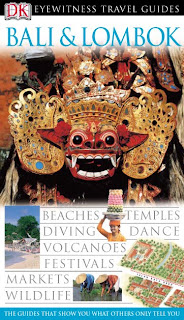
THIS GUIDE helps you to get the most from your visit to Bali and Lombok.It provides detailed practical information and expert recommendations.
Introducing Bali and Lombok maps the islands and sets them in their historical and cultural context.
Features cover topics from festivals and music to wildlife and diving. Four chapters on Bali’s regions, plus one on Lombok, describe sights of interest, using maps, photographs and illustrations. Restaurant and hotel recommendations can be found in Travellers’ Needs. The Survival Guide has tips on everything from transport to safety. Presented by : www.dk.com
File size : 14Mb 

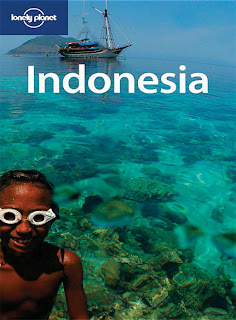
Indonesia is big, cheap, rough and effortless. It's everything to everyone, a choose your own adventure travel destination. With little more than a passport , sunscreen and a day's notice, urban fatigue victims arrive dazed at Denpasar to recover in comfortable Balinese resort. With of planning and preparation , explorers can put packs to their backs and charts six month rugged routes in which time , energy and a keen sense of adventure are the chief companions presented by : www.lonelyplanet.com 
File size : 16Mb


Borneo is, however, the island (or continent) to which our first attention will be particularly devoted. Up to the present we know little of it except its coasts and a portion of its rivers; but it is here that our principal.
The Indian Archipelago, by Frank S. Marryat
File size : 583Kb


For most people, seeing indonesia — in row — is an impossibility. The country is simply too large. In addition, overLand travel in some areas of the country is slow and exhausting and travelling from Aceh in the north of Sumatra to Jayapura. the capital of Irian Jaya as the crow flies (and It is rarely possible to fly like a crow in Indonesia!), involves a tourney of around 5000 km — the equivalent of traveling from Athens to Delhi or Vancouver to Mexico City. Many people are happy to explore Bali alone — an island, albeit a special one, which accounts for less than half a percent of Indonesia's total land area. Mostly reviewed cultural of Indonesia on west java in java island
presented by :Joshua Eliot, Liz Capaldi ,Jane Bickersteth
File size : 11Mb


Indonesian cultures include those of forest-dwelling hunters and foragers,rice growers, fisher folk, village artisans, urban office and factory workers,intellectuals, artists, wealthy industrialists, street vendors, and homelesspeople. They involve villagers in customary societies, sophisticated andcosmopolitan urbanites, as well as people who struggle to survive on city streets: beggars, peddlers, prostitutes, and pedicab drivers. Moreover, waters engulfing all Indonesian islands support seafaring peoples in contrast to societies of the lands.
Presented by :  Jill Forshee
File size : 2Mb


This e-book formed by an application , it contains many part of Indonesian archipelago an cultural .
File size : 4Mb


NOTICE :
(click the image on the book to read or download)
To download all book content click FILE on the left screen of google docs , then choose DOWNLOAD ORIGINAL .


This e-book is free for download
And we give our thanks to all authors, publishers on the availability of electronic books for free.

Sunday, 18 September 2011

Bali : The never ending story for tourist destination

Bali Island is a small beautiful island and a part of Indonesia archipelago. It own the panorama and unique culture that make this island is exclusively than others. It is located in the tropical situation that has stated this island as Dream Island for a vacation.Bali has been emitting a thick aura of tourism to many parts of the world's end. Not only natural that so stunning, indigenous traditions and customs of Bali resident, was able to siphon attention from various circles both within and outside the country. Call it, Kecak dance, which is so riveting as we witnessed in person, or any beach that can hypnotize every eye that sees, even with the model of terrace rice fields help provide a unique feel in each moment we set foot on this island .


Bali Island has many kinds of places to visit like rice paddies, beautiful panorama, volcanoes soaring up through the clouds, tourism activities and attractions, dense tropical jungle, long sandy beaches, warm blue water, crashing surf and friendly people who don't just have a culture but actually live here, daily community ritual and a lot of things make your holiday unforgettable.

In Bali, the spirits is coming out to play in the moonlight, every night is a festival and even a funeral is an opportunity to have a good time and the day you will get the enjoy of the sea breeze from the blue sea water which completing your dream holiday. Bali is an Island of God in Paradise that is perfect destination for your holiday, enjoy the paradise with your family and collages and meet Bali will offer something for everyone.

This tropical paradise has a unique blend of modern tourist facilities combined with wonderful shopping and a rich past and heritage. The Balinese people are proud of having preserved their unique Hindu culture against the advance of Islam, the dominant religion throughout Indonesia.

This is still reflected in day-to-day life and can be seen in the numerous ceremonies, Balinese festivals and magnificent temples and palaces. Some of the best surfing beaches in the world can be found on the western side of the island whilst conversely the eastern side is a wonderful haven for families, with beautiful white sand beaches and gentle seas.


Bali island is surrounded by coral reefs. Beaches in the south tend to have white sand while those in the north and west have black sand. The beach town of Padangbai in the south east has both. Bali has no major waterways, although the Ho River is navigable by small sampan boats. Black sand beaches between Pasut and Klatingdukuh are being developed for tourism, but apart from the seaside temple of Tanah Lot, they are not yet used for significant tourism.

As the most popular tourist destination in Indonesia, Bali is renowned for its highly developed arts: dance, sculpture, painting, and music - all of which play a large part in the population's spiritual practice.The vast majority of the people are bilingual or trilingual, with Balinese and Indonesian being the most widely spoken languages. Due to the large tourism industry, English is the common third language of many Balinese.

Bali has a tropical climate with year-round temperatures averaging 85ยบ F. High humidity can be expected during the wet season, during the months of October - April, while the dry season, during the months of May - September, has the lowest humidity. During June - August there is also usually a very refreshing cool breeze all day long. The central mountain area, where Ubud is located, is typically cooler than the lower coastal areas, especially at night.


In Bali there is a kind of dance that is quite unique, and is played mainly by men in which the number of players in the tens or more dancers who sit in rows and circular with a specific rhythm called the sound "cak", holding up his hands. It describes when a line of apes help fight Ravana in the Ramayana story.
Kecak Trance ritual comes from, that is the tradition in which the dancers will be unconscious for communicating with the gods, or spirits of the ancestors who then convey their expectations to the community.

In the Kecak dance does not use musical instruments and using only kincringan worn on the feet of the dancers who portray the characters being the Ramayana. While the dancers are sitting in a circle wearing a checkered cloth wrapped around their waists.Kecak dance is created in the year in the 1930s by Wayan Limbak and with a German painter Walter Spies.

They create a dance based on ancient traditions and take sanghyang from parts of the Ramayana story. This dance became popular when Limbak Wayan Balinese dancer with her tour round the world to introduce the Kecak dance. Until now Kecak dance to dance the famous Balinese art.

Well , do no need to hesitate again, visiting Bali as your holiday destination later this year, will provide its own nuances in each of your vacation experience. Welcome to Bali and enjoy all its beauty treats.

Friday, 16 September 2011

Pekalongan : Homeland of Batik

The city is located in the path that connects pantura Jakarta-Semarang-Surabaya. Pekalongan is 101 km west of Semarang, or 384 east of Jakarta. Pekalongan batik city known for earning the nickname, because of Pekalongan batik has a style that is distinctive and varied.When exploring the town of Pekalongan, we will be presented with views of batik cloth with various motifs and patterns displayed in small or large stores across Pekalongan. Every corner of the eye could see were bound to find a boutique and batik shops.Even if you browse deeper Pekalongan, you will find batik craftsmen and you can see first hand the art of batik-making process typical in Pekalongan batik or batik both print (silk-screening, red).When people asked about the City of Pekalongan, most people answer the Pekalongan Batik is the City so nicknamed The Land of Batik deserved to be pinned at the City of Pekalongan.


One of the largest centers of selling batik Pekalongan Batik is Setono Market, this market sells a wide range of batik cloth, batik any Muslim clothes, there is a shirt with batik motifs, to accessories with style and motif.

Markets which was established in 2000 was originally intended to accommodate small and medium entrepreneurs to market their production of batik in Pekalongan batik production precisely because of the previous lot sold outside the city.

Location of the market itself can be said Setono very strategic, because right is on the main street-rod Pekalongan is the main road connecting the coast line north of Java. Every person who walked down the street from the eastern tip of Java island and the northern coast of Java melawati path that will lead the city of Jakarta or otherwise certain to pass through this market.

Pekalongan batik itself is basically having special characteristics. There are 3 (three) kinds of Pekalongan batik motifs, among others: Batik Natives, Motive is not bound by the provisions of the kings of making it more freely; batik produced by people of Chinese descent; third is motif batik, batik Londo made by most offspring Dutch motif influenced by the tastes and culture of the Netherlands.

In addition to 3 (three) motif, there are also motives that is a blend of the palace and batik motif coast. This motif is created in the era of leadership of the Republic of Indonesia's first president, Sukarno and named batik Indonesia. In addition to these three motif, there are also another motives which is a motif batik from Pekalongan .

It is not wrong if they given the Pekalongan city a nickname of The Land of Batik and Setono Batik Market as a trade mark of Pekalongan, The City of batik as tourist destination

Thursday, 15 September 2011

World Batik Summit 2011 : Jakarta

Batik is an important part of the cultural heritage of Indonesia. Batik Indonesia famous around the world because it has a complicated pattern, smooth design, and color characteristics. Batik Indonesia assessed loaded with technique and has become a symbol and a culture that is rooted in community life. Batik is more than just a fabric, each design has a symbolic significance and plays an important role in social and cultural rituals.

Symbolizing the grace and elegance of Indonesian culture, Batik is an inseparable element of Indonesia. From the time of Ancient Kingdoms to the present global age, Batik has retained its original splendor and radiates its appeal to many parts of the world. . President Susilo Bambang Yudhoyono has set October 2 as the Day of National Batik Indonesia and encourage people to use batik.

in 2009, UNESCO officially been crowned batik as a world cultural heritage (the Representative List of the Intangible Cultural Heritage of Humanity) from Indonesia. With official recognition from the world organization will now enter a phase of how to internationalize batik

World Batik Summit (WBS) 2011 will be held at the Jakarta Convention Center (JCC). on September 28 - October 2, 2011 Within a 15 000 sqm space to cover. This international event under the theme "The Global Home of Batik" as a statement that Indonesia is home to the origin of the creation of this beautiful work of art.

Batik international conference will feature a photo exhibition titled "Gallery of Honor", a meeting between the buyer and seller batik, Bull exhibitions and fashion shows. Held in conjunction with the opening gala dinner, fashion show will invite classy fashion house from Indonesia and internationally with collections like Deanoor (Malaysia), Kouru (Japan), Saksit (Thailand), Tarum (India), Ika Butoni (Hong Kong), Lu Kun (China), Indonesia as well as designers like Ramli, Sebastian Gunawan, Anne Avantie, Carmanita, Bi Batik, Chossy Latu, and Parang Kencana.

Batik World Summit 2011 is expected to increase enthusiasm and to support international batik batik and batik lovers around the world. Her show will be attended by 1,000 participants from Indonesia and abroad.

More information is available at the event's official website: http://indonesia.worldbatiksummit.com/.

Indonesia Sea Festival 2011 : Manado

North SULAWESI will be host to the largest underwater festival in Asia Pacific, Sea Festival 2011. The festival will bring the underwater splendor in Manado Beach on 23-25 ​​September 2011 in Sintesa Peninsula Hotel.
Underwater Festival in Manado, is the largest outside Europe, especially France Marseille, where the "Festival Mondial de l'Image Sous Marine" was held to 39 years

The festival will be attended by world renowned film makers for the production of 3D IMAX Deep Sea and Coral Reef Adventure, Howard and Michelle Hall will attend the festival to share their experiences. Similarly, Emory Kristof, an undersea adventure from National Geographic who is recognized as the first person who discovered the Titanic wreck.

The festival which is an international underwater imagery and art competitions, receiving input from 38 countries, including Australia, Malaysia, Taiwan, Japan, Britain, Belgium, Netherlands, Thailand, Sweden, Denmark, India, France, Turkey, Denmark, Hong Kong, Spain, Russia, Italy, Austria, South Africa, the Americas and Indonesia as the host.


Participants will gain a remarkable presentation of a number of expert diving and the underwater world including Dr. Mark Erdmann, Leandro Blanco, Eric Bettens, Amanda Cotton, Steve Jones, Michael AW, Mathieu MEUR, William Macdonald and Ronny gullet, the underwater photographer whose expertise no question.

Earlier on September 19 to 23 first underwater photography competition held as part of Celebrate the Sea Festival activities in 2011. The participants had the opportunity win a medal for Outstanding Achievement Medals, Merit of Excellence Awards and the Most Influential Shoot Out the Underwater Photographer of the Year with cash and prizes of USD 5000 or about USD 43 million.

The race is intended for novice photographers and filmmakers. Race categories include: Black and White print, Color Print, Portfolio Festival, Trio, Slide Shows, short videos and feature-length documentary.
photographers can capture images directly in Bunaken Marine Park and Lembeh Strait. Photos of the winners will be used for education and conservation areas.

For weekend activities at the Peninsula Hotel Manado Synthesis will be held seminars on marine conservation, climate change related issues, underwater photography workshops, and exhibitions of photography. You can see the underwater beauty of North Sulawesi through the screening of winning films from international film festival, the Underwater World Pictures

International Sea Festival in Manado, is a nonprofit program funded by the OceaNEnvironment Australia, with its main partners are the Ministry of Culture and Tourism of Indonesia.